Blog

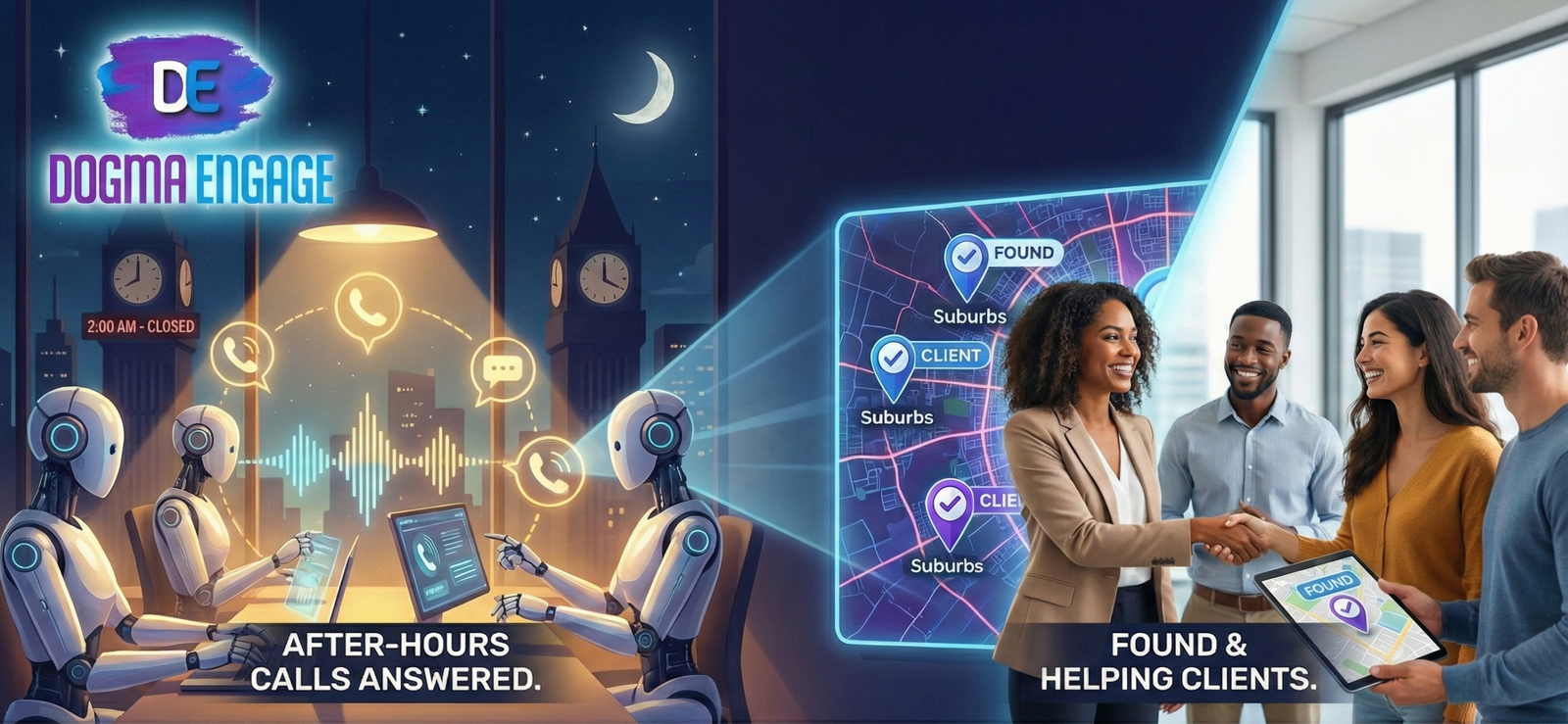
  • DogmaEngage by Artrilogic: AI-Powered Engagement Where Service Truly Matters

    In today’s competitive digital economy, service businesses are no longer judged solely by what they offer, but by how quickly, intelligently, and empathetically they respond. Missed calls, delayed responses, and generic automation all translate directly into lost revenue.

    DogmaEngage, a product offering from Artrilogic, was built to solve this exact problem.

    DogmaEngage is an AI-powered customer engagement platform designed for businesses where service quality at first contact determines conversion, reputation, and long-term growth.

    Why Service Is the New Competitive Advantage

    Across industries like healthcare, trades, and professional services, customers expect immediate answers. Research consistently shows that enquiries made after hours or during peak periods often go unanswered, even though they represent high-intent demand.

    Traditional call handling, voicemail systems, and static chatbots are no longer sufficient.

    DogmaEngage addresses this gap by ensuring that every inbound enquiry is acknowledged, understood, and acted upon, regardless of time of day.

    This is not automation for automation’s sake. It is service-first AI, designed to protect and enhance your customer experience.

    What Is DogmaEngage?

    DogmaEngage is an intelligent conversational engagement platform that acts as a digital front desk for service-based businesses.

    It combines:

    • Conversational AI voice and messaging

    • Customer intent detection

    • Booking and enquiry qualification

    • Local digital visibility optimisation

    • Continuous performance insights

    The result is a system that does more than answer calls. It engages customers in real conversations, captures intent, and converts enquiries into bookings or qualified leads.

    Built for Service Businesses That Depend on First Impressions

    DogmaEngage is purpose-built for industries where responsiveness and trust are critical, including:

    • Medical and dental clinics

    • Allied health practices

    • Trades and emergency services

    • Professional services and consultancies

      In these environments, the first interaction often decides whether a customer proceeds or moves on to a competitor.

      DogmaEngage ensures that no enquiry is ignored, even when your team is unavailable.

      Why Artrilogic Built DogmaEngage

      At Artrilogic, we work closely with service-based businesses across Australia. A consistent pattern emerged: strong operators were losing opportunities not because of poor service, but because their service was unavailable at critical moments.

      DogmaEngage was built to extend service capability without increasing headcount, while preserving the human qualities that customers value.

      It reflects our belief that AI should enhance service, not replace it.

      DogmaEngage: Because Service Still Wins

      In a world of increasing automation and noise, businesses that win are those that respond better, listen carefully, and act quickly.

      DogmaEngage ensures that your business does exactly that, every time a customer reaches out.

      If service matters to your business, DogmaEngage was built for you. visit www.dogmaengage.com.au
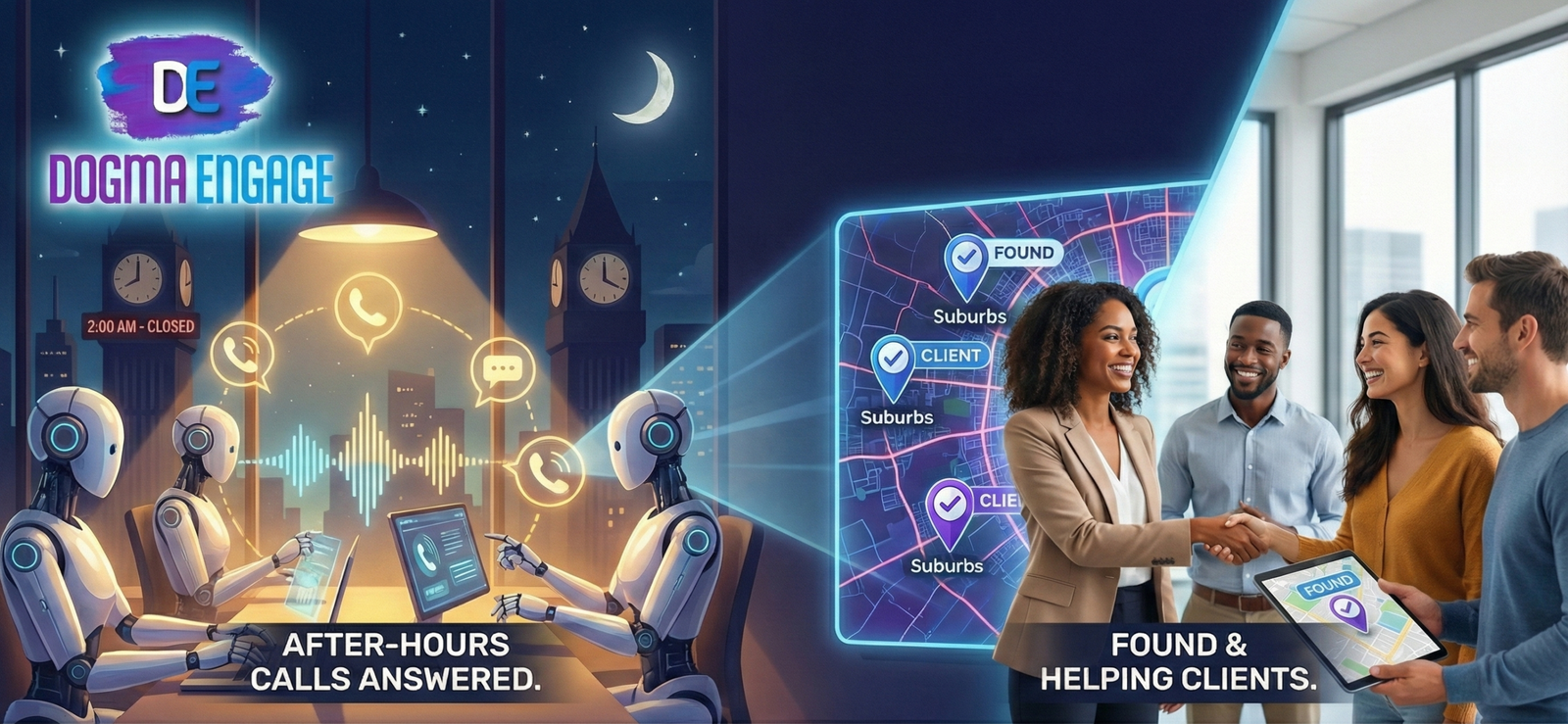
  • DogmaEngage by Artrilogic: AI-Powered Engagement Where Service Truly Matters

    In today’s competitive digital economy, service businesses are no longer judged solely by what they offer, but by how quickly, intelligently, and empathetically they respond. Missed calls, delayed responses, and generic automation all translate directly into lost revenue.

    DogmaEngage, a product offering from Artrilogic, was built to solve this exact problem.

    DogmaEngage is an AI-powered customer engagement platform designed for businesses where service quality at first contact determines conversion, reputation, and long-term growth.

    Why Service Is the New Competitive Advantage

    Across industries like healthcare, trades, and professional services, customers expect immediate answers. Research consistently shows that enquiries made after hours or during peak periods often go unanswered, even though they represent high-intent demand.

    Traditional call handling, voicemail systems, and static chatbots are no longer sufficient.

    DogmaEngage addresses this gap by ensuring that every inbound enquiry is acknowledged, understood, and acted upon, regardless of time of day.

    This is not automation for automation’s sake. It is service-first AI, designed to protect and enhance your customer experience.

    What Is DogmaEngage?

    DogmaEngage is an intelligent conversational engagement platform that acts as a digital front desk for service-based businesses.

    It combines:

    • Conversational AI voice and messaging

    • Customer intent detection

    • Booking and enquiry qualification

    • Local digital visibility optimisation

    • Continuous performance insights

    The result is a system that does more than answer calls. It engages customers in real conversations, captures intent, and converts enquiries into bookings or qualified leads.

    Built for Service Businesses That Depend on First Impressions

    DogmaEngage is purpose-built for industries where responsiveness and trust are critical, including:

    • Medical and dental clinics

    • Allied health practices

    • Trades and emergency services

    • Professional services and consultancies

      In these environments, the first interaction often decides whether a customer proceeds or moves on to a competitor.

      DogmaEngage ensures that no enquiry is ignored, even when your team is unavailable.

      Why Artrilogic Built DogmaEngage

      At Artrilogic, we work closely with service-based businesses across Australia. A consistent pattern emerged: strong operators were losing opportunities not because of poor service, but because their service was unavailable at critical moments.

      DogmaEngage was built to extend service capability without increasing headcount, while preserving the human qualities that customers value.

      It reflects our belief that AI should enhance service, not replace it.

      DogmaEngage: Because Service Still Wins

      In a world of increasing automation and noise, businesses that win are those that respond better, listen carefully, and act quickly.

      DogmaEngage ensures that your business does exactly that, every time a customer reaches out.

      If service matters to your business, DogmaEngage was built for you. visit www.dogmaengage.com.au

  • New Tools, Same Tricks: Reflecting on Business Strategy in 2026

    Let’s get the irony out of the way immediately: yes, AI helped accelerate the writing of this blog post.

    It’s a little corny to admit, but it proves the point I want to make today. AI has given us unprecedented tools for acceleration in almost every aspect of digital life, from drafting simple thoughts like this to editing video to writing complex code.

    I know many of my colleagues view “Agentic AI” software generation with skepticism, citing valid concerns about code quality and context limitations. But technical hurdles aside, my experience has taught me a more fundamental truth: Technology is rarely the answer on its own.

    You can build the “best of breed” software stack, but technology changes. More importantly, customer appetites change. AI is a powerful tool, but it is not the final answer. Driving value is.

    The “Old Trick” that drove a 30% Uplift

    Years ago, during my time as a Lead Digital Architect, I spent months designing and implementing a powerful, all-encompassing platform for a well-known organisation. It was a technical masterpiece, covering almost every conceivable ground.

    Nearing the end of that engagement, we onboarded a new CIO and Growth Strategist, Mr. Wayne McMahon.

    I distinctly remember one evening, walking towards Town Hall Station in Sydney. We were discussing the complexity of the digital landscape, and he stopped me with a single statement:

    “It’s not about the technology as such, it’s about how it’s applied to facilitate consumer convenience and drive multiple channels.”

    In a couple of weeks, he proved it. He didn’t use my massive platform. He built what we technically called “throw-away tech”: simple, focused, and ephemeral.

    The result was an immediate 30% uplift in sales.

    He didn’t chase architectural purity; he chased value.

    New Tools, Same Rules: The 2026 Strategy

    That story is relevant today because while the tools have changed (from cloud platforms to AI Agents), the trick remains the same: Business Strategy must lead Technology Strategy.

    In 2026, we must stop looking at AI as a monolith. To drive real value, as Wayne did, we need to apply this “value-first” lens to three distinct areas of your business:

    1. Open Information: Evolving Standards

    The traditional web has served us well to date, but the standards are changing, and so is the number of “crawls” in the market. How information is read, ingested, and prioritized has fundamentally evolved.

    As human beings, we have a “fight or flight” mode baked into our DNA. In a world where AI agents constantly scrape and synthesize data, customer anxiety is heightened. They are drowning in noise.

    Your business must examine how it transforms that fight-or-flight response into trust. The AI world is training on the information you put out. If your “Open Information” is structured correctly for these new standards, clear, authoritative, and helpful, you are essentially training the algorithms to trust you.

    2. Core Business: The Safety of the Known

    If you have an existing revenue-generating business, protecting it is your primary duty.

    For service businesses, the traditional operation remains king: ensure the customer is looked after and, crucially, that they “feel safe” with you.

    AI plays a role here, but it must be invisible. It should be used to ensure the speed of your service remains consistent and that you aren’t outpaced by competition. But do not let AI erode the human connection that makes a customer feel secure.

    3. Value Drivers: The Unicorn Opportunity

    This is the area everyone wants to play in, but not every business qualifies immediately.

    It is imperative that you evaluate the opportunity, but do so with your eyes open. Back in January 2025, Sam Altman noted that OpenAI was losing money on pro licenses, and shortly after, they began hiring for paid marketing platform engineers. It was the signal that the “free lunch” was over. Google, of course, has long been the king of Ads.

    But ads are not the only way. The “Value Driver” for 2026 is ensuring your business can expose its unique value through “AI Channels” safely. This hedges your business’s success against a changing web.

    How Do You Navigate This

    This is where the rubber meets the road. How do you expose your business to these AI opportunities without exposing your IP or customer data to risk?

    At Artrilogic, we don’t just “plug in AI.” We explore together with your business to identify what “throw-away technology” you can build today to drive immediate value without the pain of long-term technical debt.

    We achieve this by building robust frameworks and guardrails for AI Readiness:

    • Standardization (MCP): We help you implement the Model Context Protocol (MCP). This ensures your services expose data in a standardized way that AI agents can reliably understand and act upon, without you having to rebuild your core systems.

    • Knowledge Management (RAG): We design Retrieval-Augmented Generation (RAG) models. This framework allows you to dynamically inject your specific business context and proprietary data into AI responses, ensuring accuracy without training public models on your secrets.

    Technology changes. The “best” software will be obsolete in a year. But a strategy based on customer convenience, trust, and safety? That never expires.

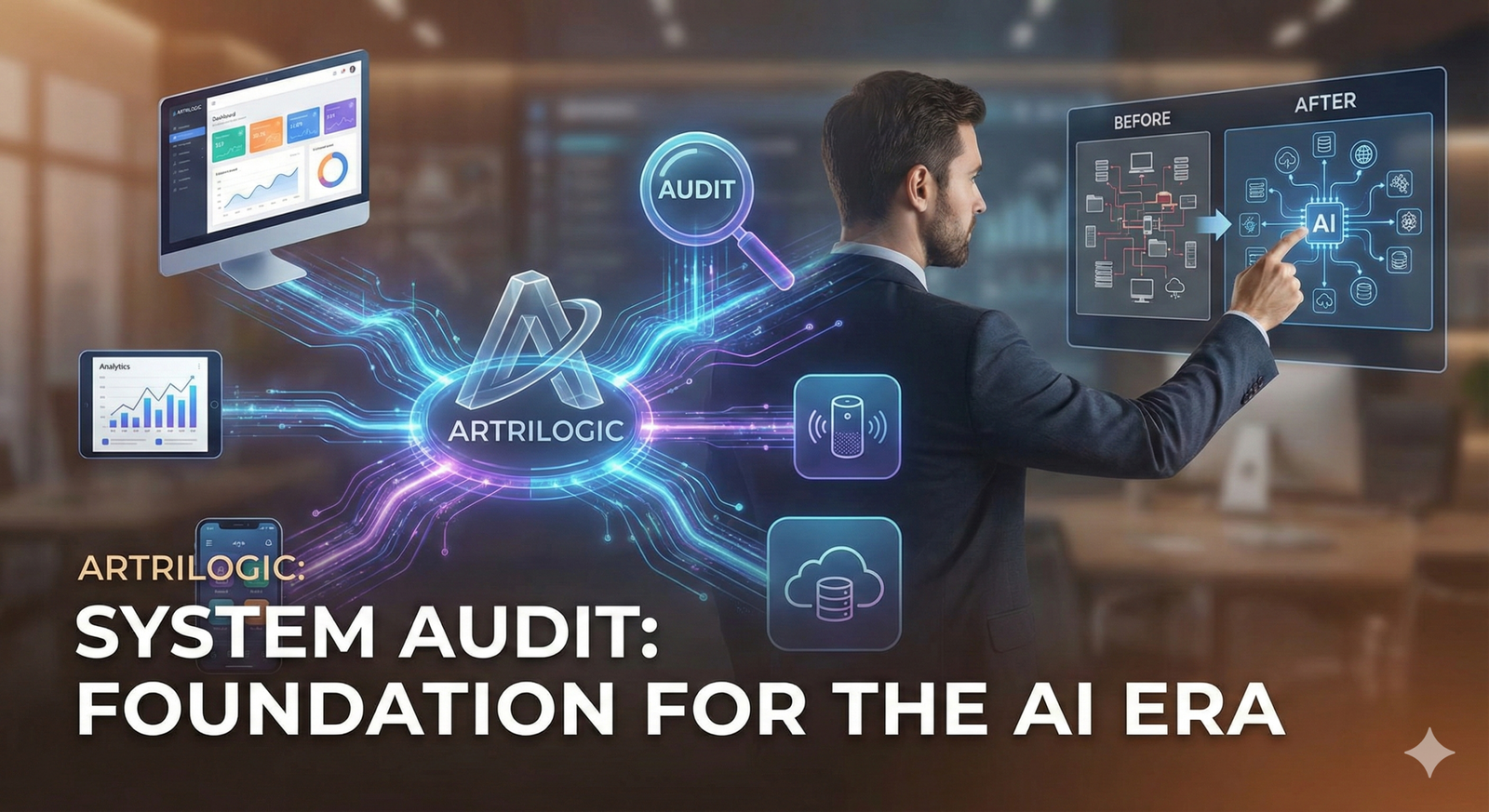
  • Beyond the Hype: Why Your AI Strategy Should Start with a System Audit

    AI is at the forefront of business discussions. Most business owners ask, “How can we leverage AI with our current technology, and what are we missing?”

    There is significant pressure to adopt AI. However, experience with past technology shifts shows that while technology evolves, core business fundamentals remain constant.

    Before investing in new AI tools, it is important to have a practical discussion. This starts with a deceptively simple question.

    What Problem Are You Actually Trying to Solve?

    Recently, I spoke with a Rental Management Agency. They came to me with a specific request: “How can we build an app for our rental application review and selection process?”

    At first, this seemed like a straightforward request. However, further discussion led us to ask, “How can we improve the rental application and review process?”

    This shift in perspective is subtle but essential.

    • The first question assumes the answer is “an app.”

    • The second question focuses on the outcome.

    In a saturated app market, adding another app is not always the solution. The focus should be on achieving better outcomes. To serve your business effectively, it is important to examine its core purpose and how technology can support growth.

    The Paradigm Shift: From Redundancy to Morphing

    Many fear that AI will render existing systems obsolete. In practice, systems typically evolve rather than disappear.

    Think about the history of the “Information Superhighway”:

    • Mainframes: Provided power but required solid, stationary connections.

    • Desktops: Brought power to the desk but lacked mobility.

    • Web/Mobile: Revived the client-server model but added “anywhere” access.

    • In the AI era, channels such as web, mobile, and desktop are becoming delivery mechanisms, while the primary interface is increasingly conversational.

    The Return of Voice

    We’ve seen “Voice” try to take off before (think early smart speakers), but it was hampered by device constraints and rigid “command” logic. Today, AI has fixed the “brain” behind the voice. The next big shift isn’t another app; it’s making your business reachable through any channel—including natural conversation.

    The Silent Issue: “Too Many Apps”

    In 2026, the primary challenge for business owners is not a lack of technology but system fragmentation.

    Customers are experiencing app fatigue. They do not want to download large files, create new passwords, or verify additional emails to interact with your business. They expect a seamless, plug-and-play experience.

    To prepare for this, your business needs to be either:

    1. The Authority: The source of truth and data that others plug into.

    2. The Super Consumer: A business that intelligently aggregates AI tools to resell an effortless outcome to the client.

    The 5-to-10 Year System Review: An Audit Framework

    If your core platforms are five or ten years old, they may not be outdated, but they could be closed systems. Leveraging AI requires an audit that extends beyond a basic checklist.

    1. Data Accessibility (The Pipeline)

    AI requires significant data access. If your data is isolated in legacy databases, an audit will determine where your source of truth resides and whether it can be integrated through APIs.

    2. Workflow Mapping vs. “App Thinking.”

    We examine your end-to-end processes to identify manual handoffs and inefficiencies. AI performs best when workflows are clearly defined. If processes are undocumented, automation is not possible.

    3. Channel Readiness

    We assess whether your current system can support voice queries and manage interactions across web, chat, and mobile notifications. The goal is to ensure your systems can handle multiple channels, not just store records.

    A Grounded Roadmap to Transformation

    We do not advocate for complete system replacement. Instead, we support a gradual, evolutionary approach.

    • Phase 1: Audit (Weeks 1-3). We assess your current technical debt and identify immediate opportunities for automation.

    • Phase 2: Stabilization (Months 1-3). We improve data quality and ensure system interoperability, establishing a strong foundation.

    • Phase 3: AI Integration (Month 3+). Once the foundation is established, we implement AI solutions such as anticipatory data analysis, automated tenant screening, or voice-activated reporting.

    The Bottom Line

    The primary risk with AI is not automation replacing people, but falling behind competitors with more integrated and efficient systems.

    A system review is not a delay; it is essential for sustainable progress. Avoid building apps solely for trends. Instead, develop systems that future-proof your core business.

  • The True Cost of System Upgrades: Why Planning Outperforms Reactive Approaches

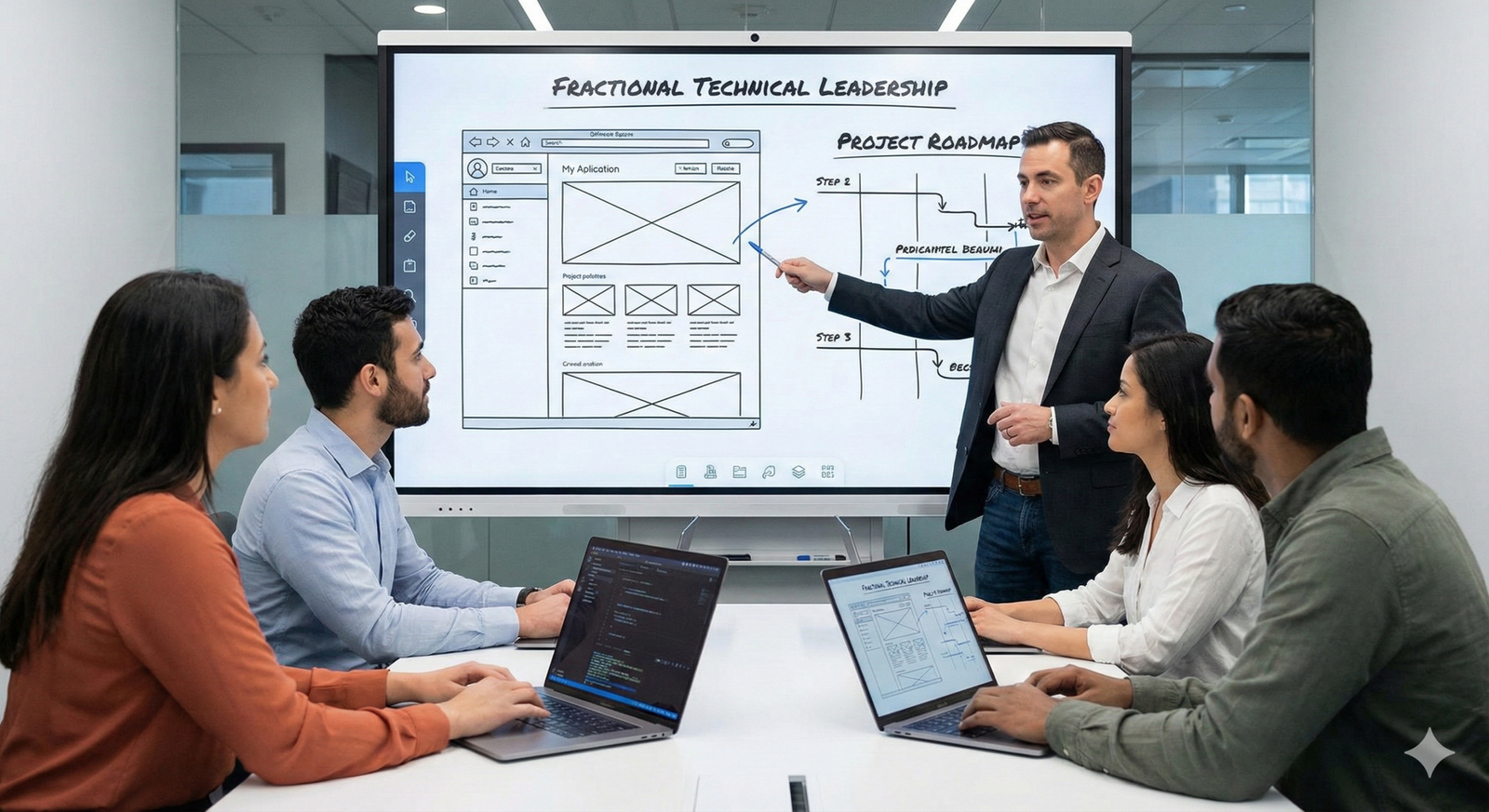
    Artrilogic Fractional Thinking - CTO True Cost of Upgrade

    As the new year begins, leadership teams across Australia are asking a key question: “Is this the year we upgrade our core systems?”

    While this may seem like a technical question, it is ultimately a critical business decision. We have found that the true cost of an upgrade extends beyond the budget line item. It includes the cost of inaction, scope creep, and the opportunity to restore engineering efficiency.

    Below are key considerations for CIOs and CTOs as they approach system modernization this year.

    1. The Non-Negotiables: Why Ignoring Issues Leads to Failure

    Some upgrades are optional, while others are essential. In today’s environment, overlooking End of Life (EOL) support is not just a technical debt issue; it represents a governance failure.

    When a platform is no longer supported, the risk becomes a tangible operational liability. Typical non-negotiables include:

    • Infrastructure Risks: Windows Server, SQL Server, and .NET Framework versions that no longer receive security patches.

    • Compliance Pressures: Regulatory bodies and cyber insurance providers are increasingly scrutinizing “unsupported platforms.”

    • The Contractual Trap: Many SOC2 or ISO27001 obligations explicitly forbid running unpatched legacy systems.

    The Strategic View: An upgrade is not just a cost; it serves as an insurance policy for business continuity.

    2. Quantifying the Cost of System Migration

    Executive stakeholders often struggle to quantify the hidden costs of legacy systems. To secure budget approval, it is essential to translate technical challenges into financial impact:

    The Reality: Maintaining legacy systems incurs ongoing costs, often in the form of inefficiency rather than innovation. Upgrades convert hidden risks into a managed investment.

    3. Success Criteria: Defining Outcomes Beyond Speed and Improvement

    Upgrade programs often lose focus when success criteria are vague. Effective modernization requires clear objectives and defined failure conditions, rather than simply targeting a modern technology stack:

    Measurable Success Criteria:

    • Reduce production incidents by 30% within 90 days.

    • Reduce cloud infrastructure costs by 15% within 6 months.

    • Cut the release cycle from monthly to weekly.

    Failure Conditions (The Guardrails):

    • Any planned downtime beyond X minutes is unacceptable.

    • Customer-facing workflows must not regress, even temporarily.

    • Business-as-usual support must continue without overburdening the core team.

      4. The True Cost Budget: More Than Development Expenses

      Many budgets fall short by considering only development time. A comprehensive CTO-level budget should account for the entire project lifecycle:

    • People and Time: Architecture leadership, QA automation, and backfill for engineers assigned to the project.

    • Shadow Infrastructure: Costs of running old and new systems in parallel, as well as adjustments to CI/CD pipelines.

    • Security & Compliance: Penetration testing, audit evidence gathering, and data migration controls.

    • Contingency: Unknown dependencies within legacy code are not unexpected; they are statistically certain.

      5. Where Upgrades Fail: The Risk of Expanding Scope

      In small to mid-sized businesses, the primary risk is scope creep presented as improvement. Projects may begin as system upgrades, but often expand into:

      • “Let’s redesign the UI while we’re here.”

      • “Can we also rebuild the reporting engine?”

      • “This is our chance to make it perfect.”

      When a project shifts from facts to subjective opinions, the risk of failure increases. To mitigate this, break work into small, testable components and enforce strict scope controls. Planning a .NET migration or a cloud-native rebuild, the multiplier is always Planning. A project that starts with a rush yet has no roadmap will eventually stall. A project that starts with a staged delivery and a rollback strategy finishes on time.

      As we often advise our clients: Speed results from clarity, not urgency.

      How Artrilogic Partners With You

      At Artrilogic, we help Australian businesses address the challenges of .NET and cloud modernization with a structured approach. We support leadership teams in three key ways:

    • Modernization Assessments: A well-defined plan, true-cost budget, risk register, and success criteria.

    • Migration Execution: Safe staged delivery, performance tuning, and security hardening.

    • Independent Validation: An objective review of your existing plan to test assumptions and ensure your budget is grounded in reality.

      Is your 2026 roadmap prepared for the realities of a system upgrade?

  • The $25k+ Surprise: Addressing Cloud Cost Overruns and Protecting Profitability

    Cloud infrastructure, particularly AWS and Azure, serves as the backbone of modern software companies, offering valuable tools, scalability, and speed. However, for many CIOs and business owners, these platforms have quietly become significant sources of unnecessary expense.

    In my experience working with businesses across Australia, from startups to established enterprises, a consistent issue emerges. Solutions initially budgeted at $5,000 to $10,000 per month often escalate to $25,000 to $35,000 or more within two years.

    In reality, only about 20% of these businesses experience growth that justifies such increased costs.

    For the remaining 80%, these additional costs represent inefficiencies rather than necessary scaling.

    The Anatomy of the Trap

    This situation rarely results from a single major error. Instead, it typically develops through gradual increases in complexity.

    AWS and Azure provide robust toolsets that teams quickly adopt. As systems mature, tools essential in the first year may become obsolete by the third year, yet they often remain in use. This persistence may be due to minor dependencies or legacy applications.

    Removing these outdated tools often involves complex risk assessments:

    • The Migration Cost: Is it worth the engineering hours to move off?

    • The Opportunity Cost: Redirecting top developers from high-priority feature development to address infrastructure issues can be an inefficient use of resources.

    This often results in decision paralysis. As a result, outdated infrastructure remains, costs increase, and inefficiencies accumulate.

    The Hidden Costs: Impact on Morale and Customers

    The effects of infrastructure sprawl extend beyond increased monthly expenses.

    1. The Morale Tax

    Technical staff inherit this management debt and face ongoing pressure to maintain or reduce costs on systems they did not design and cannot easily refactor. This environment leads to burnout among top talent.

    2. The Customer Tax

    Excessive infrastructure costs are often passed on to customers to maintain margins. In a competitive market, losing customers due to inefficient backend systems represents a significant strategic risk.

    The Solution: Challenging but Essential

    Addressing this issue requires a shift in perspective. It is not solely a technical problem but a governance challenge.

    Scenario A: You are launching clean (The Prevention)

    If you are launching a new product or feature, avoid a trial-and-error approach.

    • Architecture Planning: Develop a clear plan for both product and data modeling.

    • Load Testing : It is essential you look at spending some time (and money) to create a real world load test scenarios. Again a number of experts will advise “real-world” load is difficult to achieve specially in the AI (CUDA simulation world) it is largely true, in the same breath you can achieve near-real world load.

    • Sample Usage: Forecast expected usage. If costs increase disproportionately to user growth, this indicates architectural inefficiency.

    Scenario B: You are already in the bracket (The Cure)

    If you are looking at that $35k bill and wondering where the money went, you need a Full Audit.

    However, it is important not to divert your primary team from their core responsibilities. Having your core product team audit their own legacy infrastructure can create conflicts of interest and distract them from revenue-generating activities.

    An objective, comprehensive review of software, services, and providers is required. This audit should identify:

    • Zombie infrastructure (resources running but not used).

    • Over-provisioned instances.

    • Legacy tools that can be deprecated.

    How Artrilogic Supports Your Business

    Handling the challenges of mature cloud setups requires a new outlook, one that isn’t bogged down by the daily grind of feature delivery.

    At Artrilogic, we specialize in engaging with CIOs and business leaders to break through decision paralysis. We help you handle complicated AWS and Azure infrastructure setups, providing the objective “stock take” your business needs without distracting your internal resources from top-priority tasks.

    Whether you are addressing cost overruns or planning scalable architecture for a new product, we help ensure your technology investments deliver value. Contact us to discuss how we can optimize your infrastructure.